
 Evaluación de la respuesta patológica a la terapia neoadyuvante en pacientes con cáncer de mama tratados en ONCOSERV
Introduction: Pathological complete response (pCR) following neoadjuvant therapy in breast cancer is a key prognostic marker associated with improved survival. However, in the Dominican Republic, data on factors associated with pCR remain limited. This study evaluates the frequency of pCR and its associated factors in patients treated at ONCOSERV.
Methods: We conducted an observational, retrospective, and analytical cross-sectional study based on medical records of breast cancer patients who underwent neoadjuvant therapy between 2021 and 2023. Sociodemographic, clinical, and therapeutic variables were analyzed. Logistic regression models were used to assess associations with pCR.
Results: A total of 110 patients were included, with a pCR rate of 30%. The probability of pCR was lower in patients with advanced clinical stages (OR=0.287; 95% CI: 0.117-0.637; p=0.004) and those with poorer functional status (OR=0.281; 95% CI: 0.089-0.738; p=0.017). pCR was more frequent in patients with HER2+/HR+ tumors (OR=4.373; 95% CI: 1.141-17.970; p=0.034). A diagnostic delay of more than five weeks significantly reduced pCR in patients with advanced stages (OR=0.066; 95% CI: 0.010-0.350; p=0.002) and those with subsidized health insurance (OR=0.158; 95% CI: 0.026-0.874; p=0.037).
Conclusions: Clinical stage, functional status, molecular profile, educational level, and health insurance type influence pCR. Diagnostic delays negatively impact treatment response, underscoring the need for strategies to improve access and equity in oncological care.
Keywords:
breast cancer; neoadjuvant therapy; pathological response; health inequities
 Thumbnail
 Thumbnail
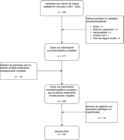
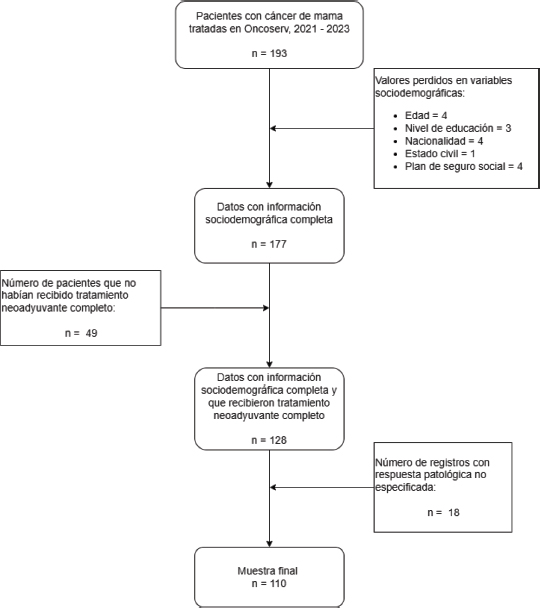 Nota: Se muestra el proceso de inclusión y exclusión de pacientes con cáncer de mama tratadas con terapia neoadyuvante en ONCOSERV entre 2021 y 2023. De un total de 193 pacientes, se excluyeron aquellas con datos sociodemográficos incompletos, sin tratamiento neoadyuvante completo o sin respuesta patológica especificada, resultando en una muestra final de 110 pacientes.
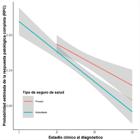
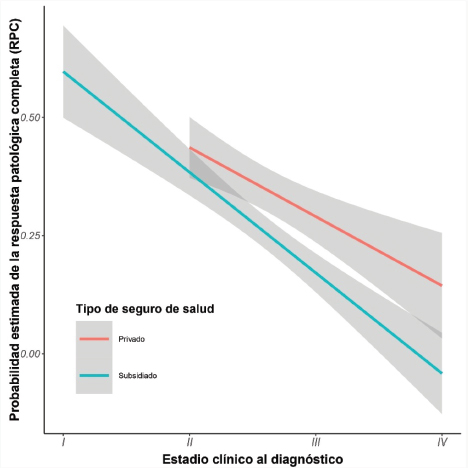 Nota: Las líneas representan las probabilidades estimadas de alcanzar RPC según el estadio clínico al diagnóstico, estratificadas por tipo de seguro de salud. Las bandas sombreadas indican los intervalos de confianza al 95%.