
 Acompañamiento de las trayectorias juveniles en Educación Profesional Secundaria (Corrientes – Argentina)
The aim of this article is to analyze how the support strategies implemented by the Secondary Vocational Education (SVE) program to sustain the educational and employment pathways of students are perceived by those involved. The methodological design considers both the jurisdictional level (regulatory analysis and technical-teaching discourse) and the institutional level (interviews with principals, teachers, and students in two SVE in Corrientes’ province, Argentina). Document analysis and interviews were conducted in 2023 and 2024. The results show that the SVE is configured as a proposal oriented toward educational inclusion, based on a flexible pedagogical organization, the articulation between general and vocational training, and the recognition of prior knowledge. Within the institutions, personalized support emerges as a central component of the program, as it articulates pedagogical, affective, and social dimensions that strengthen the sense of institutional belonging and foster the construction of life projects.
Keywords:
secondary school; vocational training; educational policy; educational strategies; youth
 Thumbnail
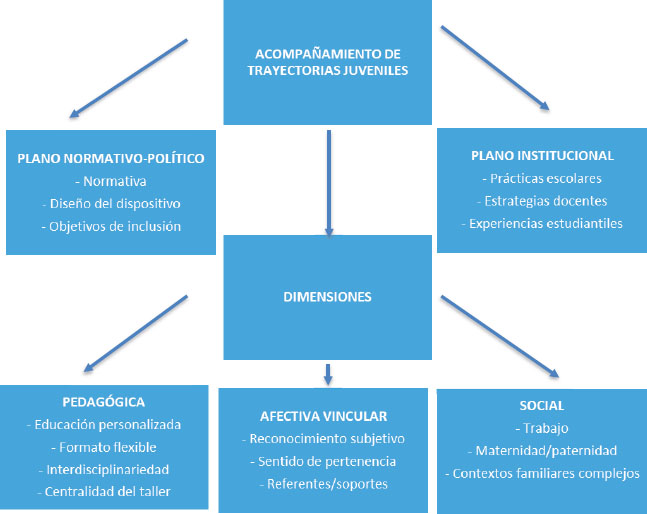 Esquema conceptual de los resultados