Insuficiencia renal aguda en pacientes pediátricos con infección por dengue: brechas diagnósticas en un centro de República Dominicana
Introduction: Dengue is an endemic disease in the Dominican Republic and may be associated with complications such as acute renal failure, especially in the pediatric population. Evidence on this relationship is limited and heterogeneous. This study aims to evaluate the clinical, laboratory, and renal function characteristics in pediatric patients with a clinical diagnosis of dengue at a center in the Dominican Republic.
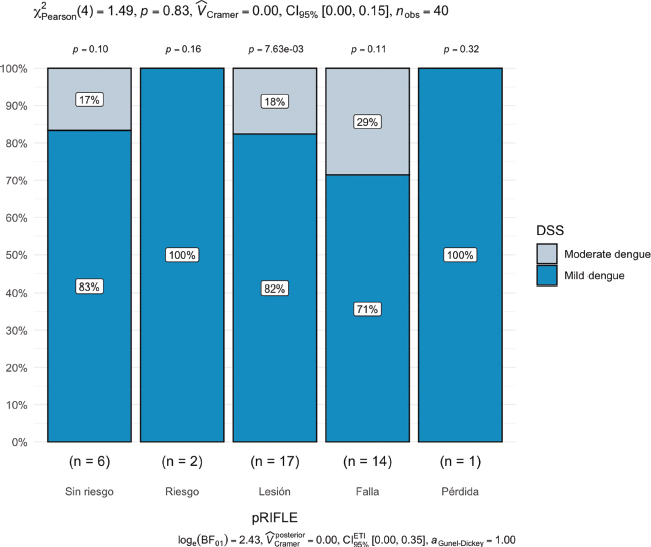
Methods: A cross-sectional, single-center study was conducted. The population consisted of patients with signs and symptoms of dengue at the Dr. Arturo Grullón Regional University Children's Hospital in Santiago de los Caballeros, Dominican Republic. The sample consisted of 44 patients. The main outcome variables were the risk of kidney injury, assessed using the pRIFLE scale, and the clinical severity of dengue, measured using the Dengue Severity Score (DSS).
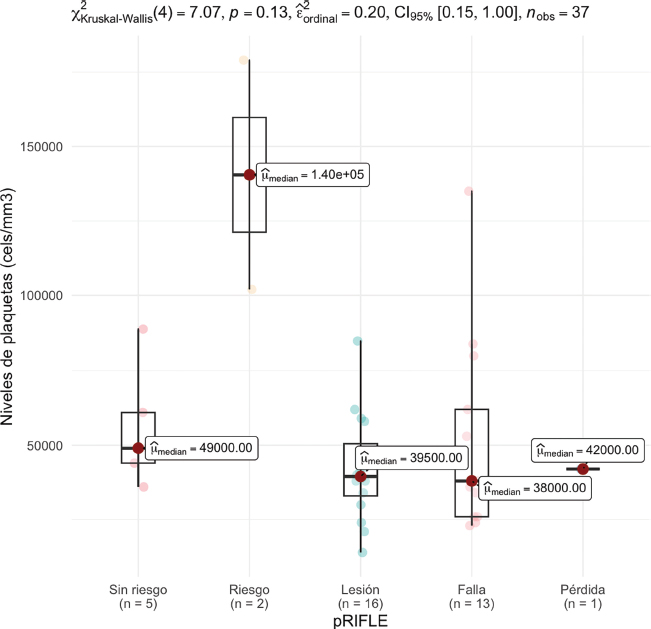
Results: The findings revealed a diagnosis of mild dengue in 35 patients (79.5%) and moderate disease in the remaining 9 (20.5%), according to the DSS. Hematuria was documented in 9.09%. The most frequent clinical symptom was myalgia (15.9%). The platelet count had a median of 41,500 cells/mm3. The relationship between platelet count and dengue severity was statistically significant (p = 0.027).
Conclusions: This study is a starting point for developing a comprehensive national characterization of pediatric patients with dengue in the Dominican Republic. In addition, it addresses a critical gap in the diagnostic process for pediatric patients with dengue, highlighting the urgency of improving access to accurate diagnostic methods.
Keywords:
Dengue; tropical disease; hematuria; renal failure; Dominican Republic
 Thumbnail
 Thumbnail