Impacto de la hipertensión y/o diabetes mellitus tipo 2 en la calidad de vida y percepción de enfermedad en pacientes del centro de atención primaria de Boca Canasta, Baní
Introduction: WHO links non-communicable diseases to genetic, physiological, environmental and behavioral factors, generally of long duration. Every year, 17 million people <70 years of age die from chronic diseases.
General objective: to determine the correlation between the burden of disease, measured in DALYs, and the perception of quality of life in patients with HTN or DM2.
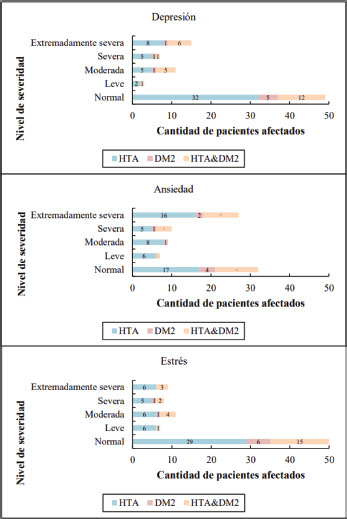
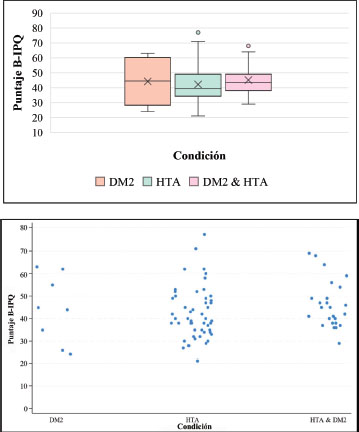
Specific objectives: (1) to identify the daily functional capacity of patients with HTN or T2DM; (2) to describe the quality of life of patients with T2DM or hypertension; (3) to establish the relationship between the levels of anxiety and depression with the presence of DM2 or HTN in the affected patients.
Methods: observational, prospective, analytical and cross-sectional study following STROBE guidelines. A sample of 85 patients was calculated using Pearson’s correlation formula. Standardized questionnaires and inferential statistics (Spearman, ANOVA) were used to investigate whether there is a correlation between burden of disease, perception of quality of life and perception of disease.
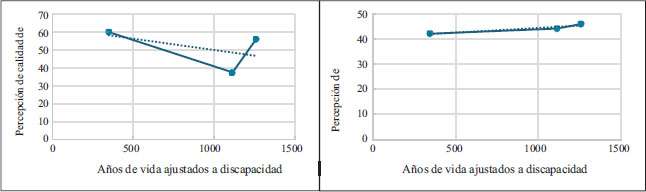
Results: a weak negative correlation (-0.5) was found between DALYs and quality of life, while DALYs and disease perception showed a positive correlation (1.0).
Conclusions: the higher the DALY, the lower the perceived quality of life and the greater the perception of disease. Patients with HTN or DM2 reported moderate to low perceptions of their quality of life and the impact of the disease, highlighting important disease-related challenges.
Keywords:
Disability-adjusted life years; hypertension; disease perception; quality of life; type 2 Diabetes Mellitus
 Thumbnail
 Thumbnail
 Thumbnail